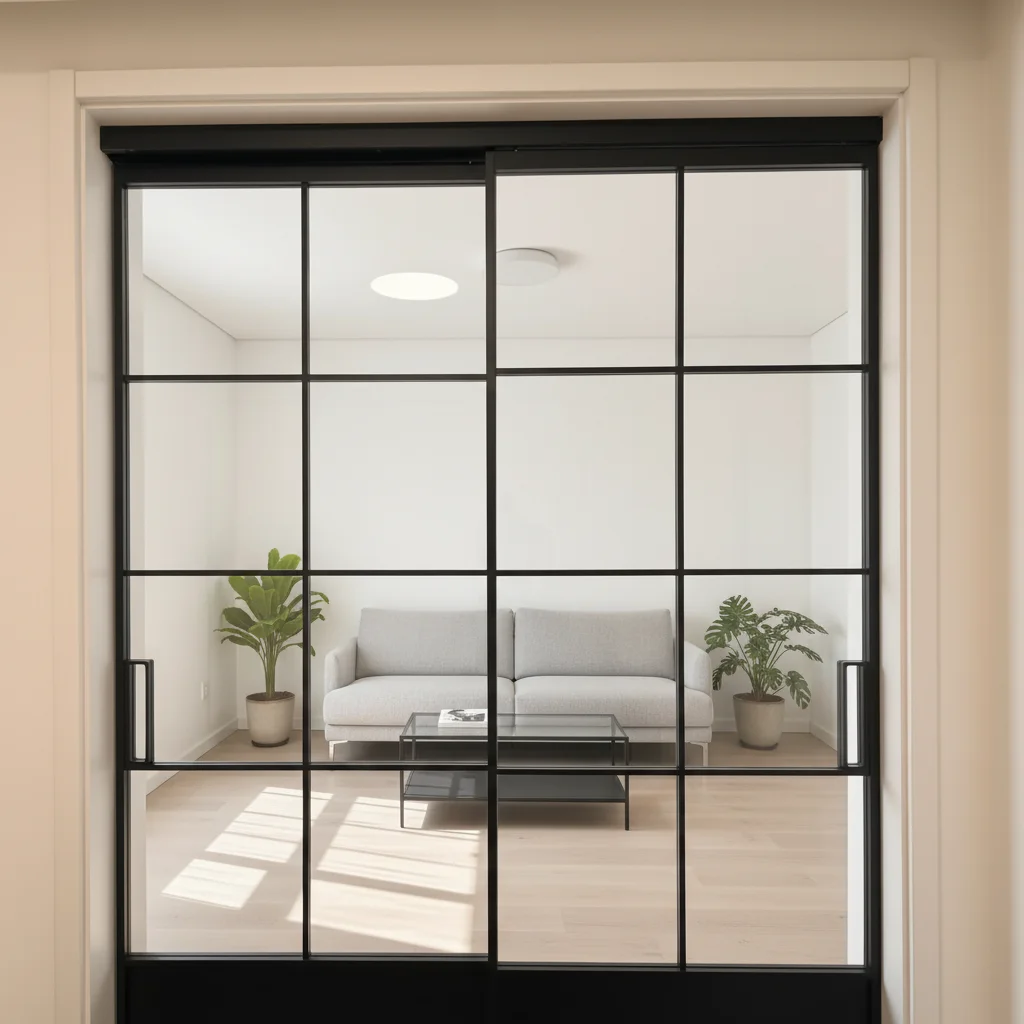
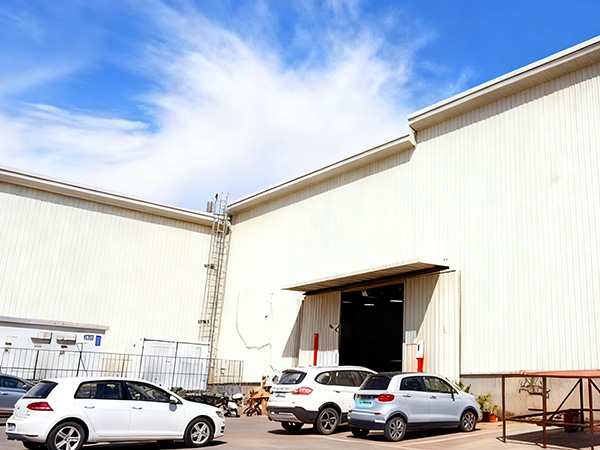
Walk through any working warehouse, aircraft hangar, or manufacturing plant, and the spatial math becomes obvious pretty quickly. Every inch of floor space has a job to do—holding inventory, housing equipment, keeping traffic lanes clear for forklifts and personnel. The moment a door starts eating into that usable area, it is costing money. Not in some abstract, theoretical way. In real, measurable operational drag.
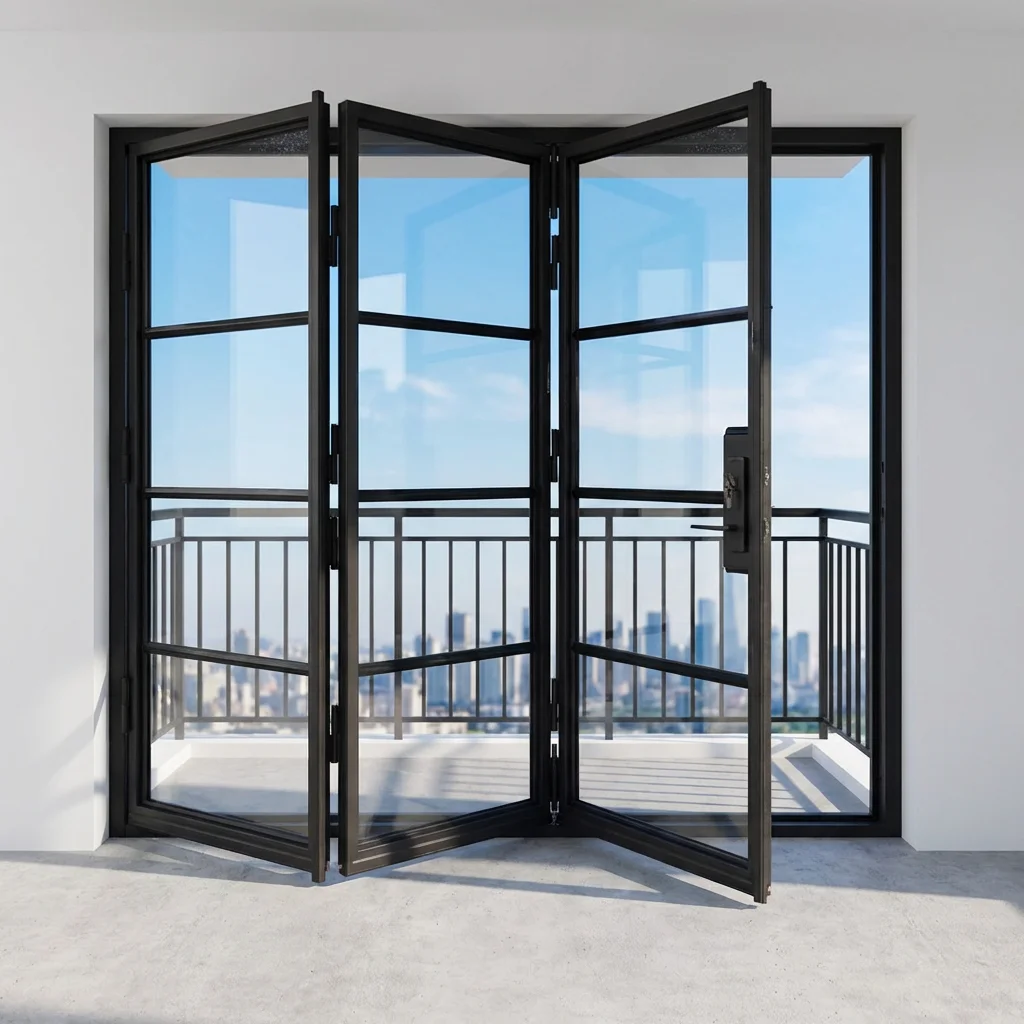
Steel folding doors address this problem in a way that other door types simply cannot match. A conventional sliding door requires a substantial amount of clear wall space on at least one side to stack the door panels when open. An overhead sectional door needs vertical clearance that often interferes with ceiling-mounted equipment or restricts the usable height of the opening itself. Steel folding doors, by contrast, collapse the door panels into a compact bunch at one or both sides of the opening, consuming minimal depth.
The practical difference is striking. For a 40-foot-wide entry point, a traditional sliding door needs roughly 20 feet of clear wall space on one side just to accommodate the stacked panels. A steel folding door can compress that same 40-foot opening into about 6 to 8 feet of depth. That recovered space—12 to 14 feet of wall area that can now hold racking, staging zones, or clearer traffic patterns—translates directly into operational capacity. Facilities that have made the switch report that the space savings alone often justify the investment within the first year of operation.
Industrial settings are not gentle on building components. Forklifts clip door frames during tight maneuvers. Wind-driven debris slams into panels during storms. Temperature swings cause constant thermal expansion and contraction. Dust, grime, and chemicals settle into every gap and crevice. A door that performs beautifully in a commercial office building often fails within months on a factory floor.
Steel folding doors are engineered with these realities baked into the design. The construction typically involves galvanized steel leaves, often formed from sheet steel with a thickness that provides substantial impact resistance. These leaves are interconnected through a pantograph or "lazy tong" mechanism using solid steel lattice bars. The result is a door assembly that distributes impact loads across multiple interconnected points rather than concentrating stress on a single hinge or track component.
This matters because impact damage is not just an aesthetic issue. A dented door that no longer seals properly lets in dust, moisture, and temperature extremes. A misaligned track creates friction that wears out components faster and increases the load on opening mechanisms. The distributed-load design of steel folding doors means that when something hits the door, the energy spreads across the entire assembly rather than punching through at a weak point. In industrial environments, where the average door takes more impacts in a month than a residential door takes in a decade, this durability advantage adds up quickly.
One of the most underappreciated aspects of industrial door selection is wind load resistance. In regions prone to hurricanes, typhoons, or even seasonal high-wind events, a door that fails under pressure becomes more than an inconvenience. It becomes a safety hazard and a source of costly damage to the building envelope.
Steel folding doors are designed to handle these forces. Some configurations come standard with wind load resistance that places them well beyond typical building code requirements for most commercial and industrial structures. For context, ASTM E330 provides the testing framework for determining structural performance under static pressure loads. Doors that meet these standards have been proven to maintain their integrity when subjected to the kinds of extreme pressure differentials that occur during severe weather events.
What makes this particularly relevant is the chain reaction that happens when a door fails during a storm. It does not just let in water and wind. It creates internal pressurization that can compromise the entire building structure. A door that blows in during a hurricane turns the building into a wind tunnel, with pressure differentials that can lift roofs and push out walls. Steel folding doors, with their multi-panel construction and robust track systems, distribute wind loads across the entire assembly rather than concentrating them on a single point of failure. This is not theoretical. Facilities that have weathered major storms with steel folding doors in place have consistently reported that the doors remained operational when other building components failed.
Industrial spaces are notoriously difficult to heat, cool, and keep quiet. Manufacturing equipment generates noise. Large open spaces lose heat or gain it depending on the season. Personnel working in these environments pay the price in discomfort, reduced productivity, and higher utility bills.
Steel folding doors, when properly engineered with thermal breaks and weather sealing, achieve thermal performance that rivals fixed wall sections. The multi-panel design allows for continuous sealing along each folding joint, cutting down on air infiltration in a way that single-panel doors cannot replicate. This matters because air leakage is often the primary driver of energy loss in large industrial openings. A door that seals tightly across its entire perimeter and along every panel joint reduces the load on HVAC systems in a measurable way.
Acoustic separation is another area where steel folding doors deliver. The mass of steel panels, combined with sealed joints, reduces sound transmission much more effectively than lighter materials. A manufacturing facility that switched from fabric curtains to insulated steel doors cut noise bleed by an amount that took the office space from uncomfortably loud to perfectly acceptable without needing additional acoustic treatments. For facilities that need to maintain consistent temperatures or protect workers from excessive noise, the thermal and acoustic performance of steel folding doors delivers benefits that show up on utility bills and employee satisfaction surveys alike.
Industrial facilities house valuable equipment, expensive inventory, and sometimes hazardous materials. Security is not optional. Steel folding doors provide a level of physical protection that other materials simply cannot match. The steel construction resists forced entry in ways that aluminum or fiberglass doors cannot. The multi-point locking systems that are standard on quality steel folding doors distribute securing forces across multiple points, making them significantly harder to defeat than single-point locks.
Fire protection is equally important. Steel does not burn, and it does not contribute to fire spread. In facilities where fire codes require specific ratings for door assemblies, steel folding doors can be engineered to meet those requirements without the bulky construction that would be needed with less rigid materials. This is not just about compliance. It is about giving personnel the time they need to evacuate and giving fire response teams the ability to contain a fire before it spreads to other parts of the facility.
There is a difference between reading about door performance on a spec sheet and seeing it work in a real operational environment. A public transport company in Europe needed to retrofit access doors for their vehicle storage warehouses. The challenge was not trivial. The openings needed to accommodate buses and other large vehicles. They required reliable daily operation in a high-traffic environment. And they had to integrate with an existing building layout that offered limited clearance.
The solution involved multiple steel folding doors installed across the facility. The doors needed to open and close hundreds of times per day, day after day, in a setting where dust, temperature changes, and the occasional bump from a vehicle were simply part of normal operations. Years later, the doors were still performing without major service interventions. The maintenance logs showed a fraction of the service calls that had been required by the previous door configuration. This is the kind of real-world validation that matters—not laboratory testing under ideal conditions, but years of daily abuse in an environment that does not cut anyone any slack.
Selecting the right door for an industrial application is not about finding the cheapest option or the one with the most impressive marketing materials. It is about understanding the specific demands of the environment and choosing a solution that will perform reliably over the long haul. Steel folding doors offer a combination of space efficiency, durability, weather resistance, thermal and acoustic performance, and security that is difficult to match with any other door type.
That said, they are not the right choice for every application. Facilities with very narrow side clearance may need to consider bi-parting configurations or alternative opening mechanisms. Environments with extremely corrosive conditions may require specialized coatings or material treatments. The key is to match the door specification to the actual operating conditions, not to assume that one size fits all.
Facilities that have made the investment in quality steel folding doors consistently report that the operational benefits—faster throughput, less downtime, lower energy costs, better working conditions—more than justify the initial outlay. Companies like SenYi have built their reputation on delivering exactly this kind of reliable, application-engineered door solution for industrial clients across multiple markets, with a manufacturing capability that supports both standard configurations and project-specific requirements.
 Hot News
2026-10-19
2026-10-12
2026-10-07
2026-09-25
2026-09-17
2026-09-11

Xiamen SenYi is a professional enterprise specializing in the research, design, production and sales of high-quality iron doors. It is dedicated to providing customized iron door that combine safety, practicality and aesthetic value for various customers.
No. 1043, Yincheng Mingzhu, Tong'an District, Xiamen City, Fujian Province, China
Copyright © 2025 by Xiamen SenYi Ironware Co., Ltd Privacy Policy
 EN
EN