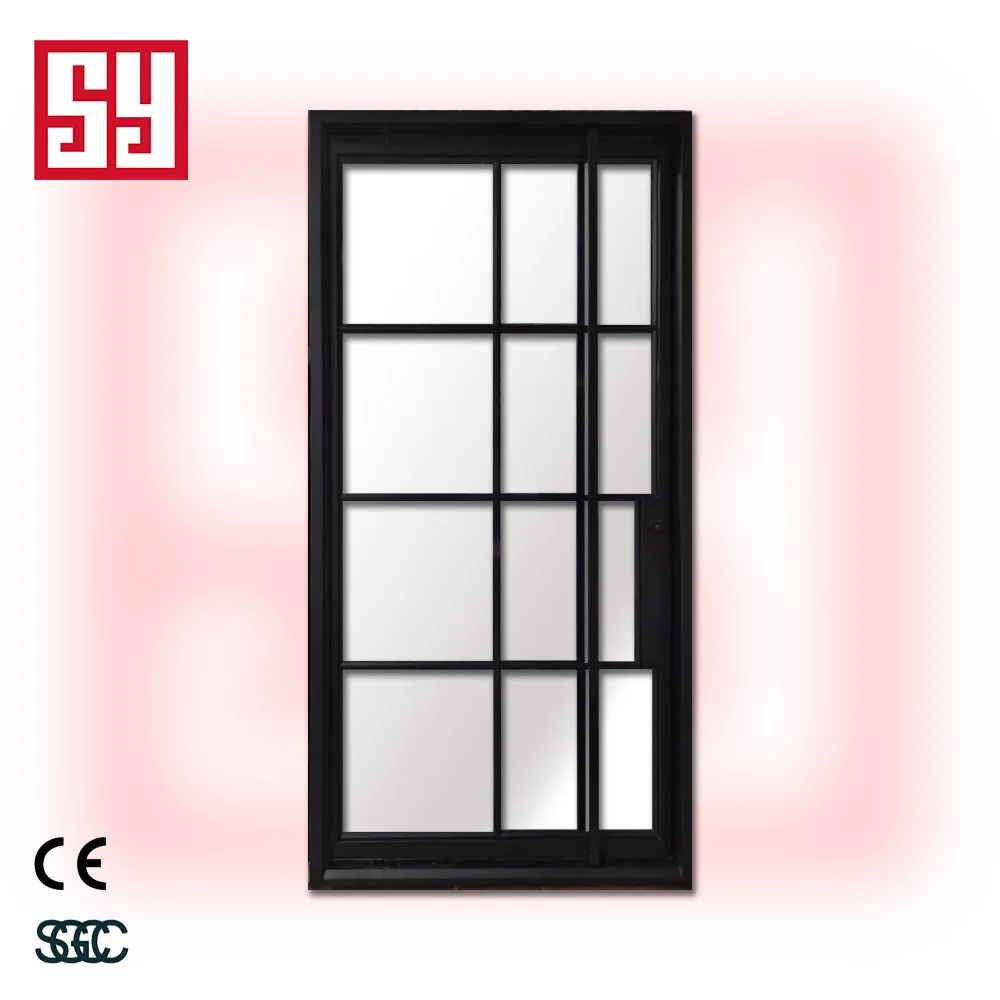
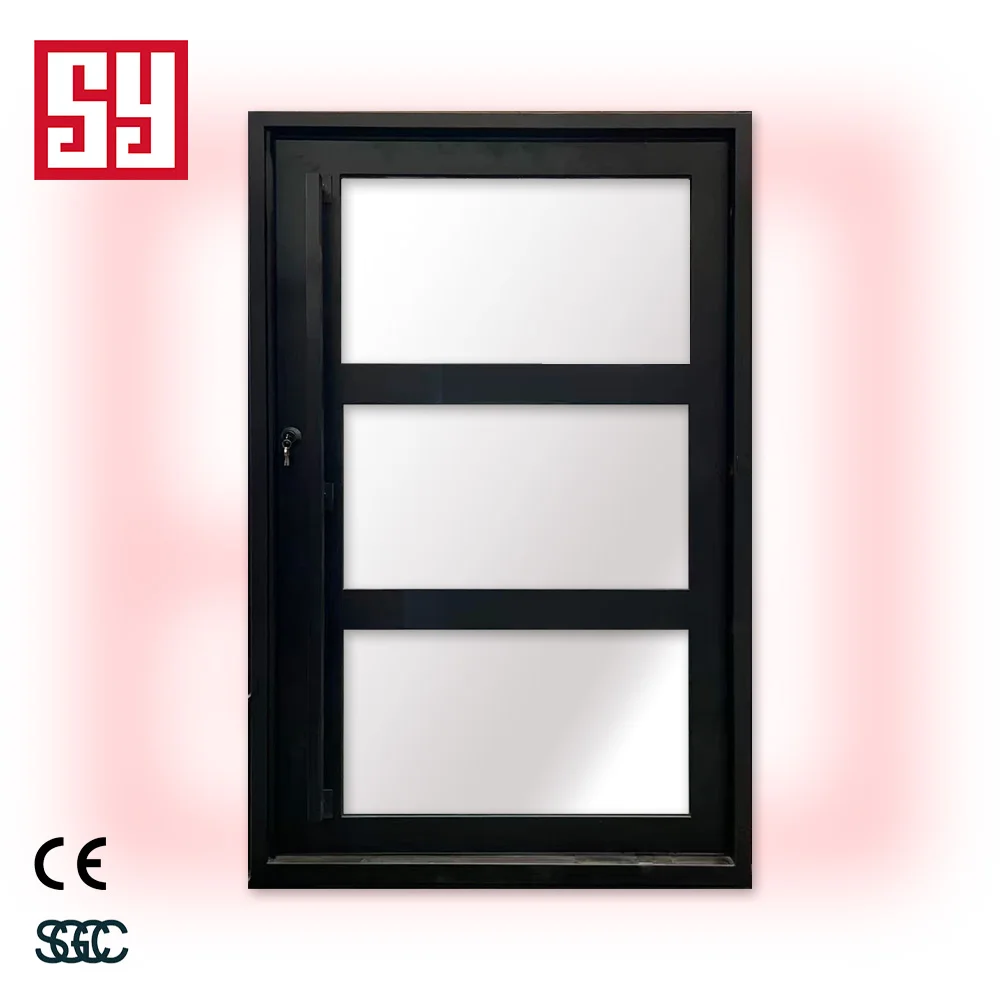
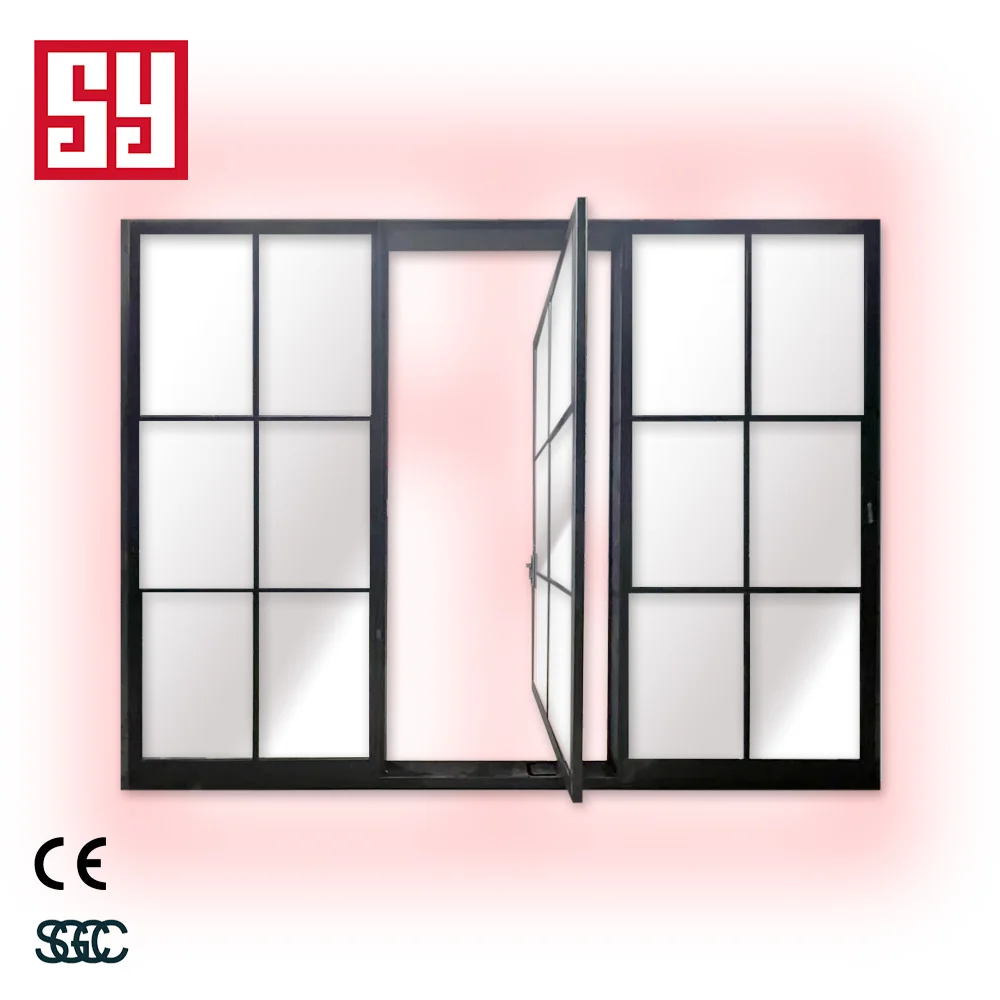
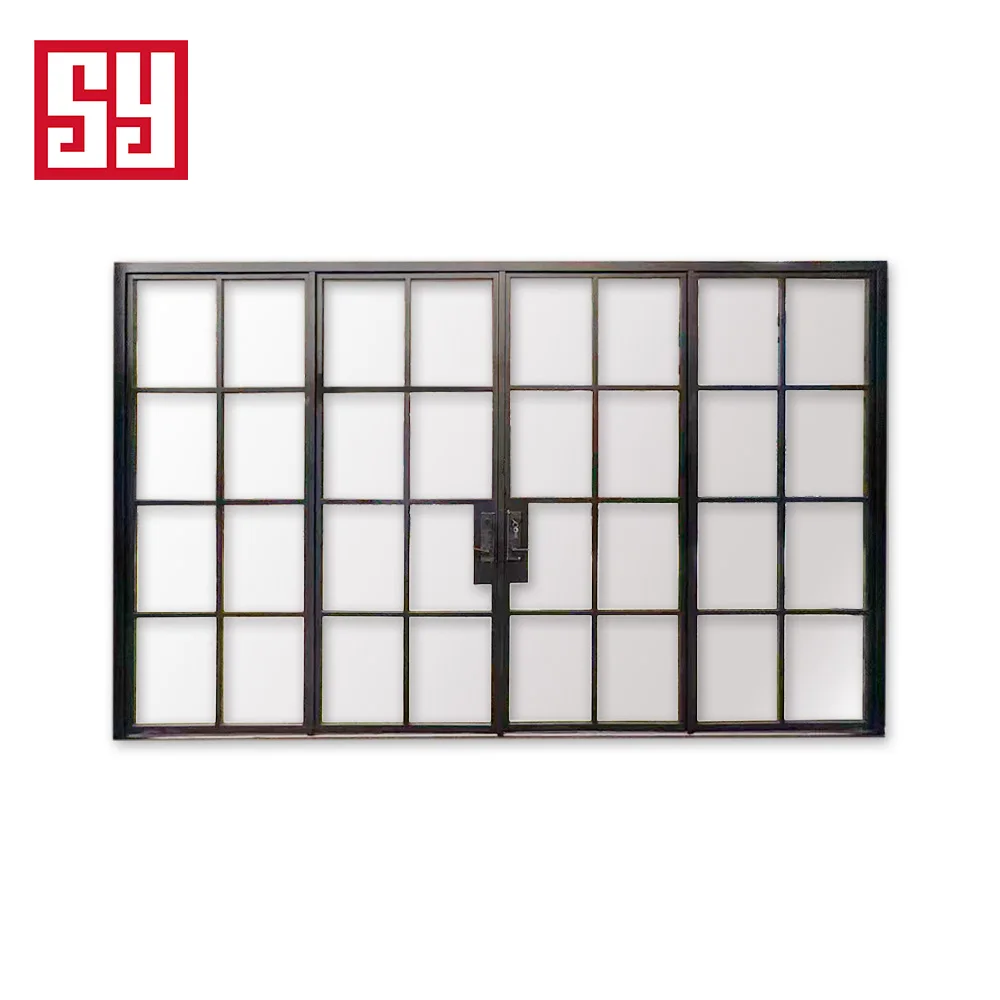
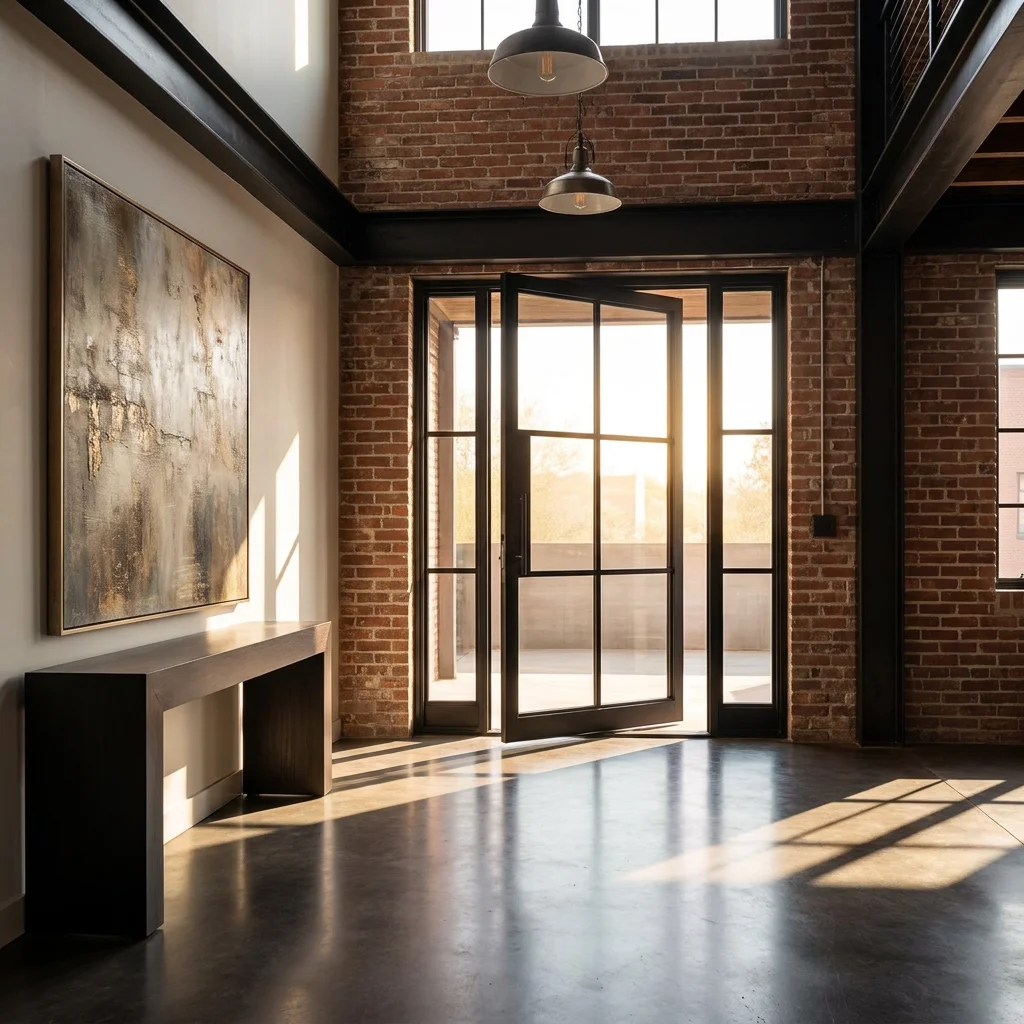
French doors have long been associated with elegance and natural light, but the material choice has traditionally been wood or aluminum. Steel changes the equation entirely.
A steel French door brings structural integrity that wood simply cannot match and dimensional stability that aluminum struggles to achieve. The steel frame, typically fabricated from hollow rolled sections, provides a rigid backbone that resists warping, twisting, and sagging over time. This matters because French doors, by their very nature, are wide openings with substantial glass areas—exactly the kind of configuration that puts maximum stress on frame materials.
The numbers tell the story. A properly engineered steel French door assembly can support significantly larger glass panels than a wooden counterpart without requiring bulky frame profiles that defeat the purpose of the design. Slim sightlines—the narrowest possible frame width between glass panels—are one of the defining aesthetic features of French doors. Steel's high strength-to-weight ratio allows manufacturers to achieve these slim profiles while maintaining structural performance that exceeds building code requirements for commercial and residential applications alike.
The primary appeal of French doors has always been the ability to flood interior spaces with natural light. Steel French doors take this concept and push it further by allowing larger expanses of glass without the chunky frames that would be required with less rigid materials.
Consider a typical paired French door opening of 6 feet wide by 8 feet tall. A wood frame might require 3 to 4 inches of visible frame width on each side to maintain structural integrity, reducing the effective glass area significantly. A steel frame, by contrast, can achieve the same structural performance with visible frame widths of 1.5 to 2 inches. That difference—roughly 3 to 4 inches of additional glass width per door leaf—translates into substantially more daylight entering the space.
For commercial spaces like retail storefronts, restaurants, or office lobbies, this increased light transmission has measurable benefits. Studies have consistently shown that access to natural daylight improves occupant well-being and can reduce reliance on artificial lighting during daytime hours. While the exact percentage varies by application, the principle is clear: more glass equals more light, and steel makes more glass possible.
One of the historical criticisms of steel doors has been thermal conductivity. Steel is an excellent conductor of heat, which in theory means it can transfer outdoor temperatures to the interior more readily than wood or vinyl. However, modern steel French doors have addressed this challenge through thermal break technology.
A thermal break is essentially a barrier of low-conductivity material—typically polyamide or similar polymers—inserted between the interior and exterior faces of the steel frame. This breaks the thermal bridge that would otherwise allow heat to flow freely through the metal. The result is a door assembly that performs competitively with aluminum or even wood frames in terms of thermal insulation, while maintaining steel's structural advantages.
For projects in climates with extreme temperature ranges, thermally broken steel French doors can achieve U-values that meet or exceed energy code requirements. Double or triple glazing further enhances thermal performance, and advanced weather seals minimize air infiltration. The combination of thermal break technology and high-performance glazing means that steel French doors can now be specified for energy-sensitive projects without compromising on aesthetics or structural performance.
Noise control is another area where steel French doors deliver surprising advantages. The density and mass of steel provide inherent sound-dampening properties that lighter materials cannot replicate.
Acoustic performance is measured using Sound Transmission Class (STC) ratings, with higher numbers indicating better sound insulation. Standard steel doors with steel frames and commodity sound seals typically fall into the STC 25-29 range. However, acoustically enhanced steel French door assemblies can achieve significantly higher ratings, with some configurations reaching STC 35-39 or beyond.
For context, an STC 35-39 rating means that loud conversation can be heard but not fully understood through the door—a substantial improvement over standard assemblies. In applications like ground-floor retail spaces in mixed-use buildings, office conference rooms adjacent to busy corridors, or residential installations facing noisy streets, this acoustic performance translates directly into occupant comfort and usability.
The key mechanisms at play are mass and airtightness. Steel's density provides the mass needed to block sound transmission, while precision-engineered frames and high-quality weather seals ensure the airtight closure necessary to prevent sound leakage around the door perimeter. When combined with laminated or acoustic-grade glass, steel French doors can achieve noise reduction levels that make them viable even in demanding urban environments.
A recent office building renovation in Central London demonstrates the practical advantages of steel French doors in a real-world setting. The project, located at 22-23 Little Portland Street, involved transforming an existing commercial premises across ground, basement, and four upper floors.
The design called for thermally broken steel windows and doors throughout the building. Steel French doors were specified for several key locations where the design required both visual openness and thermal performance. The thermally broken construction ensured that the large glass areas would not become sources of heat loss or gain, while the slim steel profiles maintained the clean, contemporary aesthetic the architects envisioned.
What made this project particularly notable was the integration of steel French doors into a mixed-use commercial context. The building needed to meet modern energy efficiency standards while preserving the character and functionality of a period structure. Steel French doors provided the solution—delivering the thermal performance required by current building regulations without forcing the design to compromise on the expansive glass areas that defined the architectural vision.
The lifespan of steel French doors is measured in decades, not years. Steel does not rot, warp, or suffer from the moisture-related degradation that plagues wood doors over time. It does not become brittle with age or lose structural integrity through UV exposure.
This durability translates into lower lifecycle costs. While the initial investment in a quality steel French door may be higher than a wood or fiberglass alternative, the reduced maintenance requirements and extended service life typically result in a lower total cost of ownership. Paint finishes on steel doors, when properly applied and maintained, can last 15 to 20 years before requiring recoating—a service interval that compares favorably with the annual or biennial maintenance often recommended for wood doors in exterior applications.
The material also offers inherent fire resistance that wood cannot provide. Steel French doors can be manufactured to meet fire rating requirements where building codes demand them, without sacrificing the aesthetic qualities that make French doors desirable in the first place.
| Attribute | Steel French Door | Wood French Door | Aluminum French Door | Fiberglass French Door |
|---|---|---|---|---|
| Structural strength | Highest | Moderate | Moderate | Low to moderate |
| Dimensional stability | Excellent | Poor (warps) | Good | Good |
| Thermal performance (with thermal break) | Excellent | Good | Good | Excellent |
| Acoustic insulation | Excellent | Moderate | Moderate | Moderate |
| Maintenance frequency | Low (every 15-20 years) | High (annual) | Low | Low |
| Fire resistance | Excellent | Poor | Poor | Poor |
| Slim profile capability | Excellent | Moderate | Good | Moderate |
The table above highlights the balanced performance that steel French doors deliver across multiple criteria. While other materials may excel in one specific area—wood in traditional aesthetics, aluminum in lightweight construction, fiberglass in thermal performance—steel offers the most comprehensive combination of strength, durability, thermal efficiency, and design flexibility.
For architects and building owners who need a door that performs across all these dimensions without compromising on visual impact, steel French doors have become the go-to specification. Manufacturers like SY Doors have developed expertise in crafting these assemblies to meet the demanding requirements of both commercial and residential projects, combining precision engineering with practical durability.
 Hot News
2026-10-19
2026-10-12
2026-10-07
2026-09-25
2026-09-17
2026-09-11

Xiamen SenYi is a professional enterprise specializing in the research, design, production and sales of high-quality iron doors. It is dedicated to providing customized iron door that combine safety, practicality and aesthetic value for various customers.
No. 1043, Yincheng Mingzhu, Tong'an District, Xiamen City, Fujian Province, China
Copyright © 2025 by Xiamen SenYi Ironware Co., Ltd Privacy Policy
 EN
EN