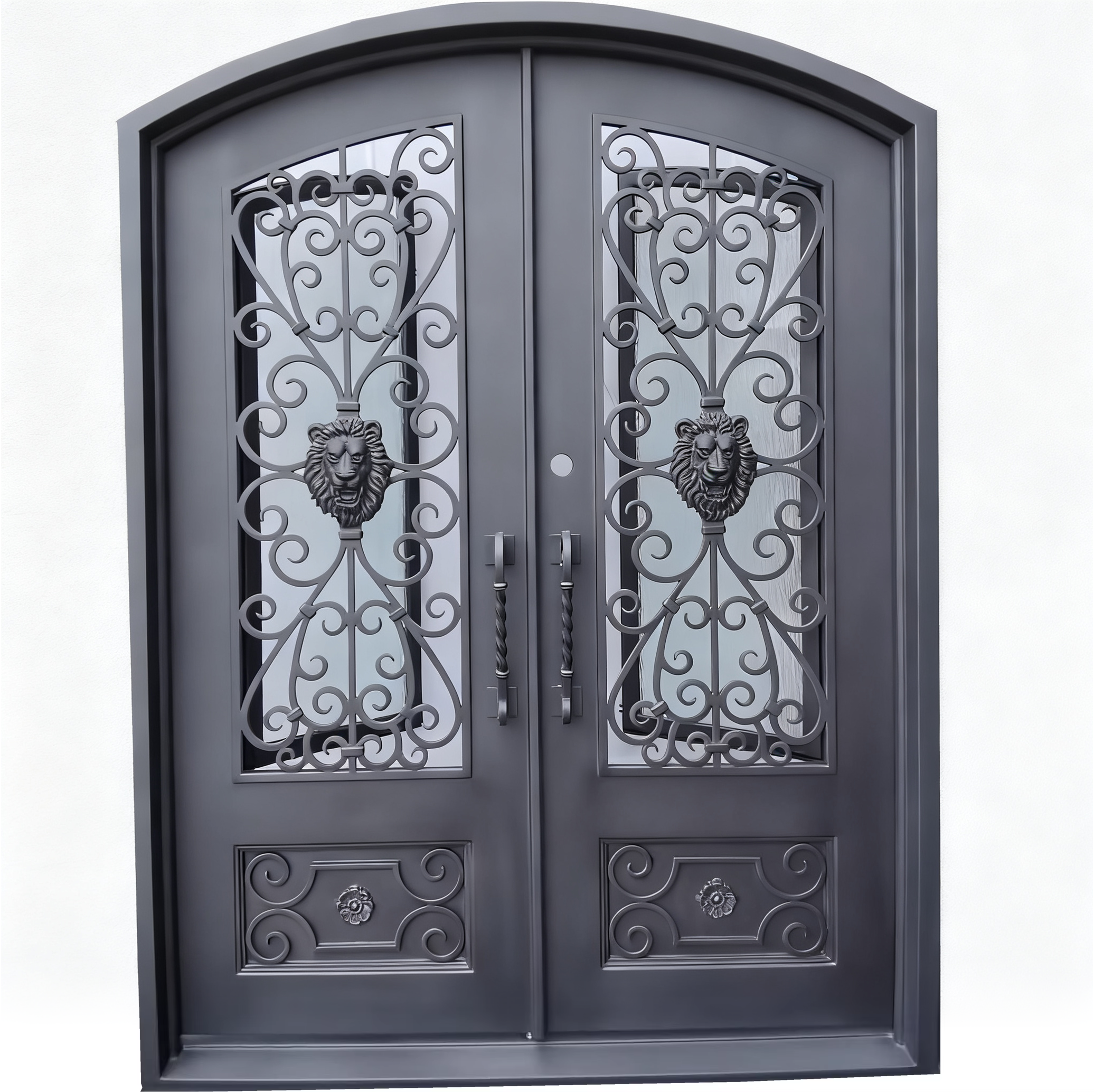
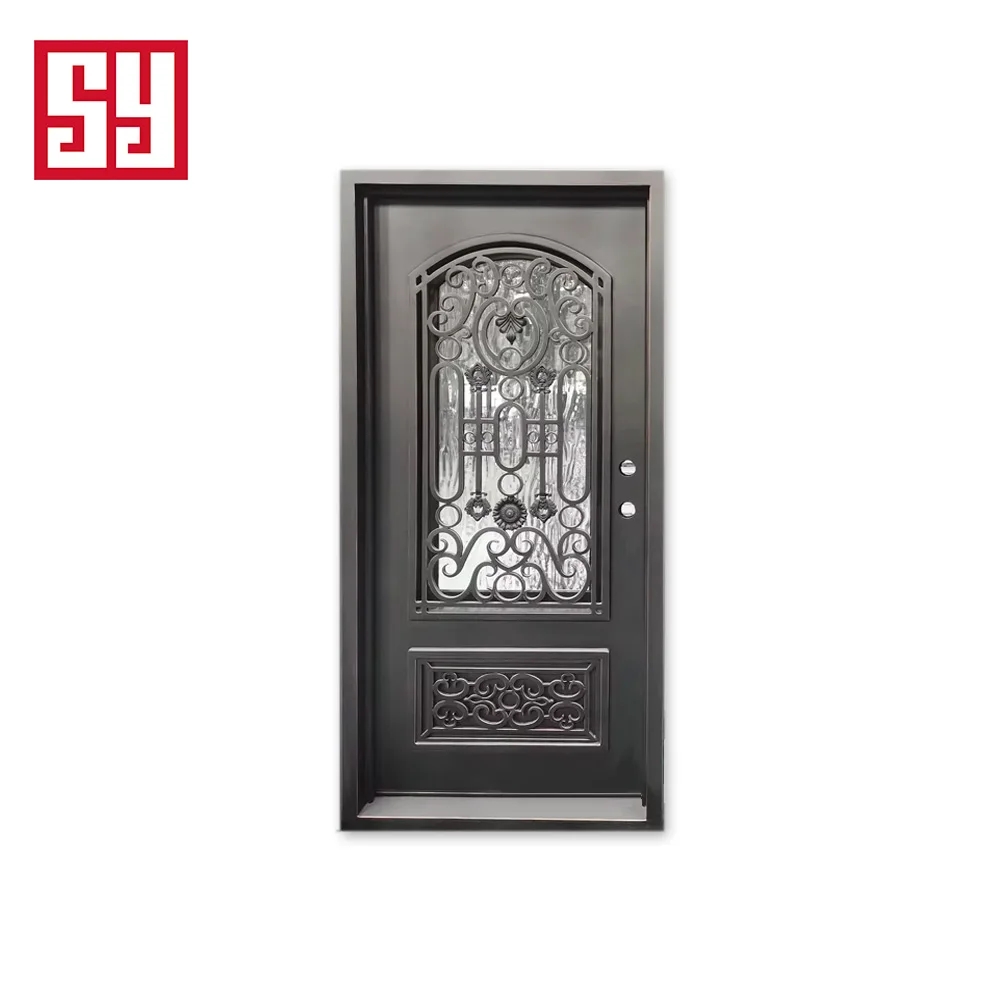
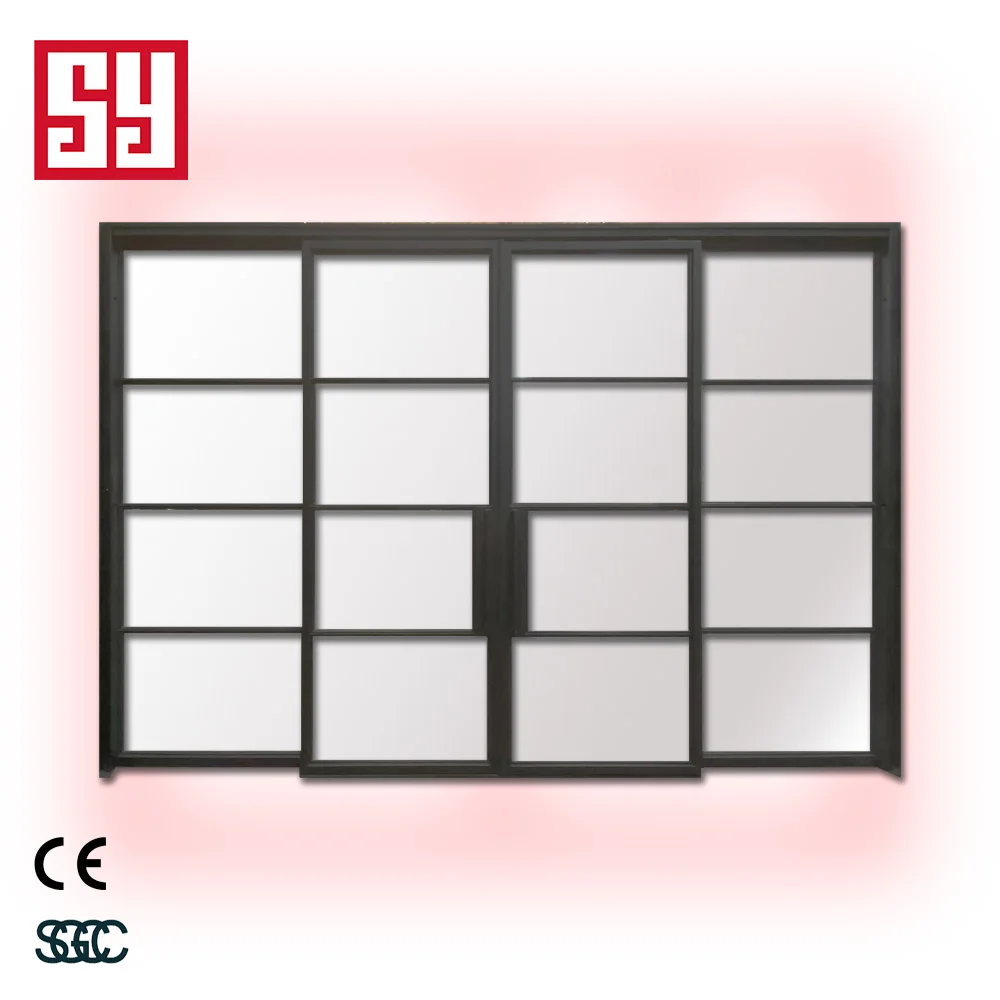
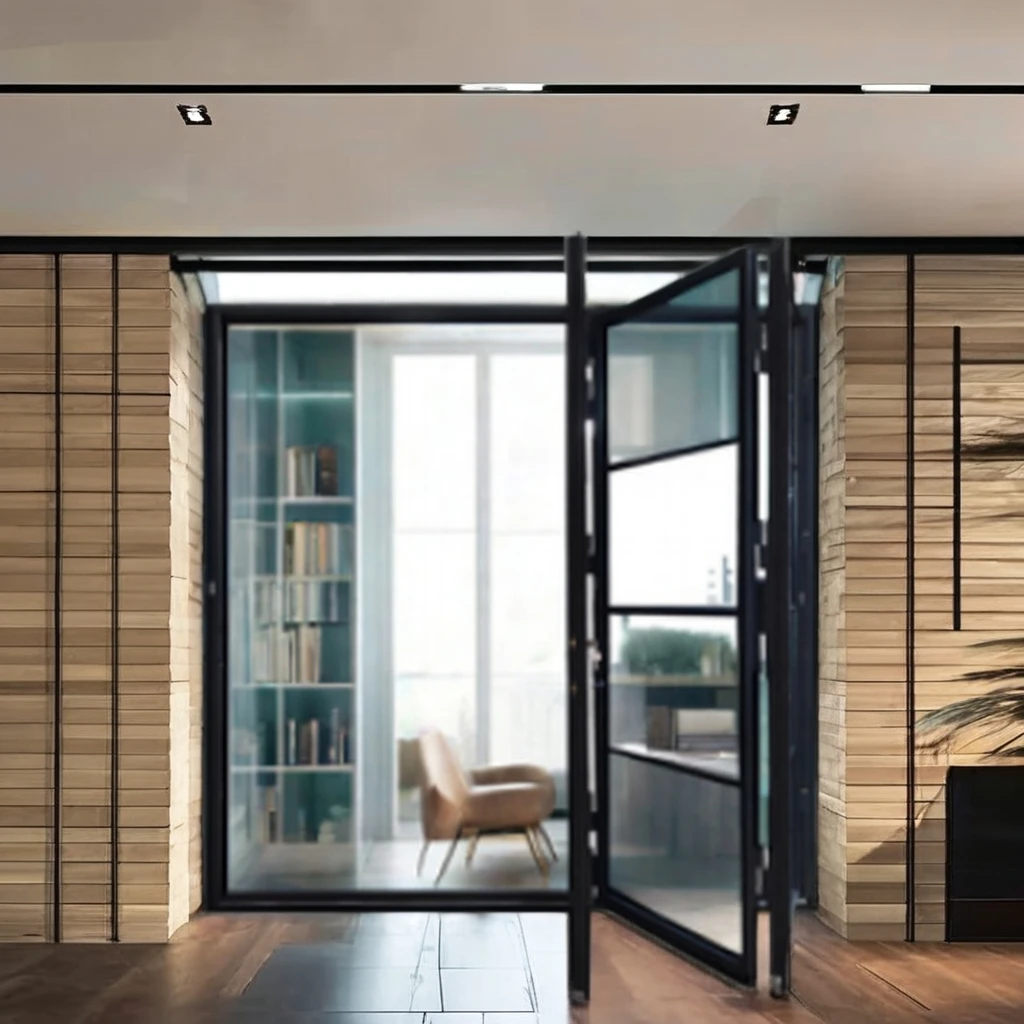
A standard residential door runs 32 to 36 inches wide and maybe 80 inches tall. Step into a luxury property or a boutique hotel lobby and the entry opening often jumps to 48, 60, or even 72 inches wide, with heights that push past 10 feet. That scale change breaks the assumptions behind a conventional hinged door. A hinge leaf carries the door weight at the jamb, and as the leaf gets wider and heavier, the bending moment at that jamb climbs fast. Steel pivot doors for luxury spaces solve that problem by moving the load path. The leaf rotates on a top and bottom pivot, so the weight goes into the floor and header instead of the side jamb. The result is a door that can be both wider and heavier without demanding a structural upgrade to the wall.
There is also a spatial benefit. A hinged door swings out into the room and needs clear floor area to operate. A pivot door can rotate on a center axis or an offset axis, and with a 360-degree pivot it can swing completely out of the way. In a gallery, a penthouse, or a hotel suite, that freedom changes how furniture and circulation can be arranged.
Walk up to a high-end pivot door and the first thing missing is the hinge. Concealed pivot hardware sits inside the door leaf and the floor, with only a small floor plate visible, often around 8 millimeters high. The door appears to float. That visual effect is not a trick of lighting. It comes from removing the side-mounted hardware that normally interrupts the door edge.
Modern pivot sets also allow hold positions. A door can be set to rest at 90 degrees, 180 degrees, or any other interval. FritsJurgens, a European hardware maker, certifies its concealed pivot hinges to 500 kilograms, and those hinges have been used on interior pivot doors of that weight in projects such as the Atrium building in Amsterdam. For luxury spaces, the hardware is not just a mechanism. It is part of the design language. A flush door that sits in the same plane as the wall, with no visible frame or hinge, reads as a moving wall panel rather than a traditional door.
The material choice matters because a pivot door leaf behaves like a beam spanning from the pivot axis to the latch edge. Deflection under its own weight is a function of stiffness, and steel has a big advantage there. The elastic modulus of steel is roughly 200 GPa. Aluminum comes in around 69 GPa, and rigid PVC is far lower. That means a steel stile can carry the same load with a much smaller cross section. For a luxury space that wants large glass panels and slim sightlines, that stiffness is what keeps the frame from looking clunky.
| Performance metric | Hinged steel door | Steel pivot door |
|---|---|---|
| Maximum practical leaf width | 36 to 42 inches | 60 inches and above |
| Maximum practical leaf weight | 250 to 300 pounds | 1,100 pounds and above |
| Visible hardware | Hinge leaves at jamb | Concealed floor pivot |
| Load path | Side jamb | Floor and header |
| Frame sightline | Wider to resist deflection | Slimmer for same span |
The table is not a marketing claim. It reflects the hardware and profile systems that are actually available. The tradeoff is weight. A steel pivot door is heavy, and the floor structure, the pivot pocket, and the header all need to be designed for that load. In a renovation, that can mean cutting into a slab or adding reinforcement. In new construction, it is much easier to plan for.
Luxury spaces usually come with high-performance glazing, and a steel pivot door has to keep up. Early steel doors conducted heat straight through the frame, which caused condensation and undermined the glass. Thermally broken steel profiles fix that by inserting a polyamide or composite separator between the interior and exterior faces. With a proper thermal break and low-E dual-pane glass, a steel pivot door can reach a U-factor around 0.30 or lower. That number depends on the whole assembly, including the frame-to-panel seal and the threshold.
Sealing is the harder part. A pivot door does not close against a side jamb, so the perimeter seal has to work around a non-standard geometry. Magnetic seals and multi-point locking systems are common solutions. The threshold has to accommodate the floor pivot and still resist wind-driven rain. In coastal or high-wind regions, the assembly should be rated under AAMA/WDMA/CSA 101/I.S.2/A440, and a rating such as CW PG60 indicates a design pressure suitable for exposed locations. Not every steel pivot door is built for that. Some are interior-only, and some exterior models rely on a deep threshold that may not suit a flush luxury floor. Being honest about those limits early saves a lot of trouble later.
A recent project on a coastal villa illustrates the tradeoffs. The design called for a main entry opening roughly 60 inches wide and 10 feet tall, with a steel pivot door carrying laminated low-E glass. A hinged door at that size would have required a structural header upgrade and a heavier jamb, which would have eaten into the clean interior elevation. The pivot option moved the load to the slab. The catch was the floor pocket. The pivot had to be set plumb within a tight tolerance before the concrete was poured, and the finished floor had to be coordinated with the threshold so the door sweep would seal correctly.
The door leaf was specified with a thermally broken frame and stainless steel hardware to handle salt air. Installation took longer than a standard door, and the hardware cost more. But the finished opening reads as a single plane of glass and steel, with no visible hinge line. In a luxury space, that visual result is often the whole point. The project also showed a limitation. A pivot door does not adjust like a hinged door. If the pivot axis is off, the door will not hang right, no matter how much the hardware allows for fine tuning.
Steel pivot doors for luxury spaces are not the low-cost option. The hardware is more expensive than a hinge set, the installation is more demanding, and the floor work can add cost. Maintenance is modest but not zero. The top and bottom pivots should be lubricated about once a year with a silicone-based lubricant. Heavy oil attracts grit and wears the bearings. Coastal environments also require periodic cleaning to remove salt and pollutants.
There are also cases where a pivot door is the wrong call. If the opening is standard width, a hinged door will cost less and perform just as well. If the floor cannot be modified, a pivot installation may not be feasible. If the project needs a fast, low-risk door package, a conventional system is easier to source and install. The luxury argument for pivot doors comes down to scale, sightlines, and the ability to make a heavy door move like a lightweight panel. When those priorities matter, the extra cost and coordination can be justified. When they do not, a simpler door is the smarter choice.
Xiamen SenYi Ironware Co., Ltd. (SenYi) manufactures steel pivot door hardware and frame systems for projects that need tight dimensional control. The critical interfaces between pivot, frame, and leaf are where most field problems start, and SenYi builds its production process around those tolerances. For luxury projects with large openings and custom floor details, early coordination with SenYi's engineering team can help resolve pivot and threshold questions before they turn into expensive site changes.
 Hot News
2026-10-19
2026-10-12
2026-10-07
2026-09-25
2026-09-17
2026-09-11

Xiamen SenYi is a professional enterprise specializing in the research, design, production and sales of high-quality iron doors. It is dedicated to providing customized iron door that combine safety, practicality and aesthetic value for various customers.
No. 1043, Yincheng Mingzhu, Tong'an District, Xiamen City, Fujian Province, China
Copyright © 2025 by Xiamen SenYi Ironware Co., Ltd Privacy Policy
 EN