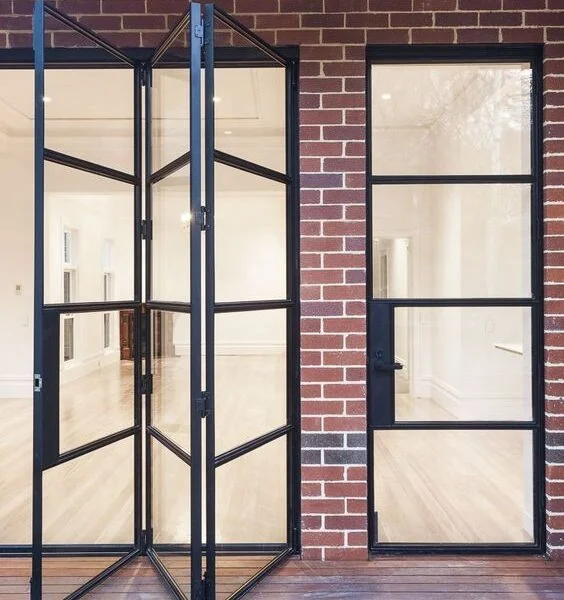
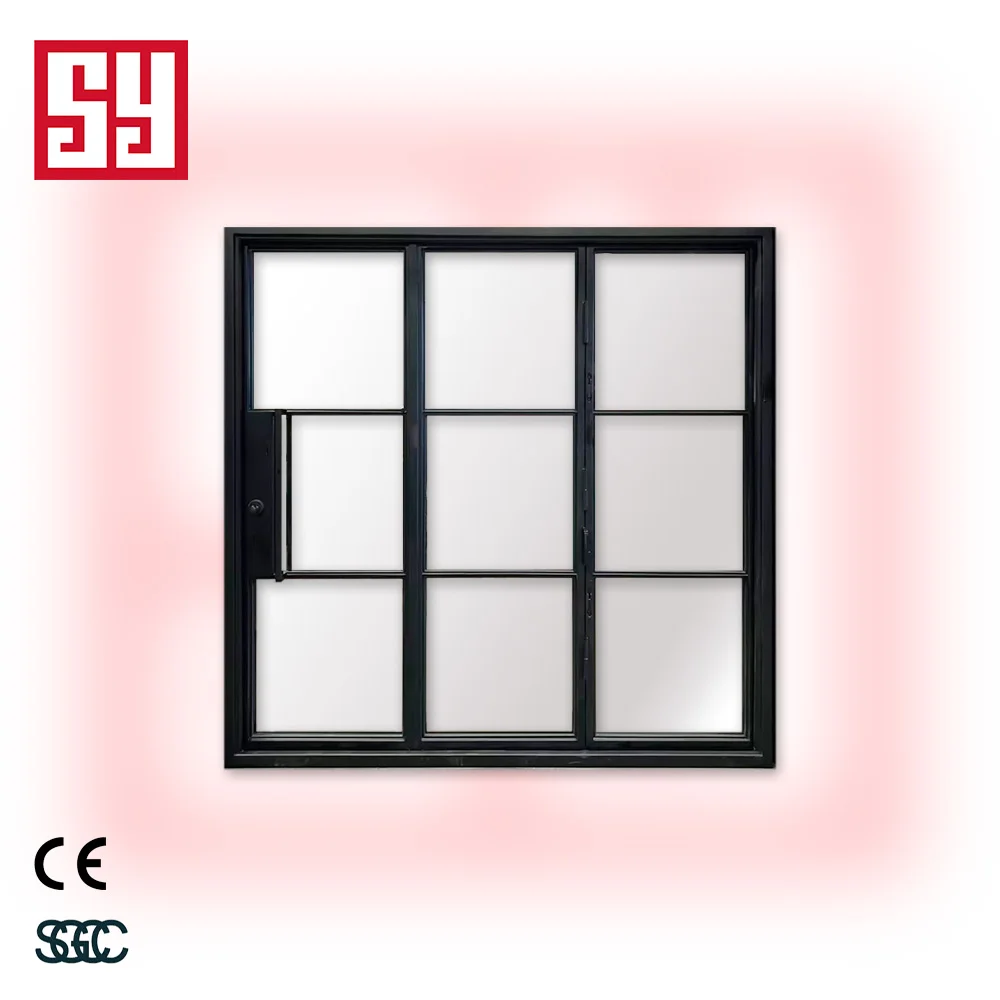
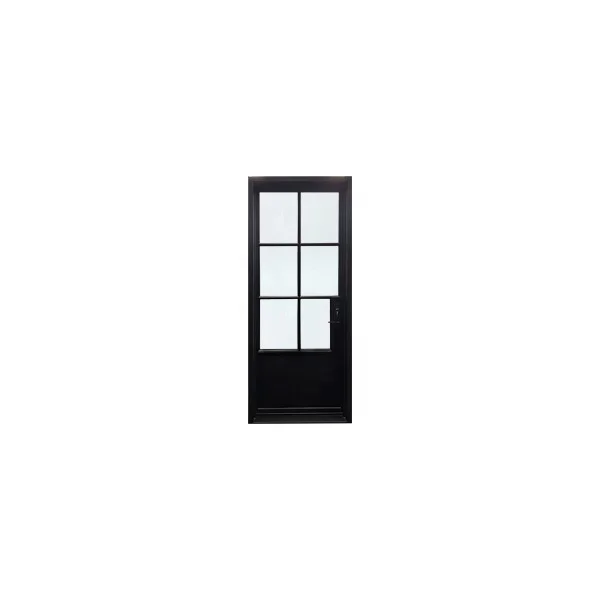
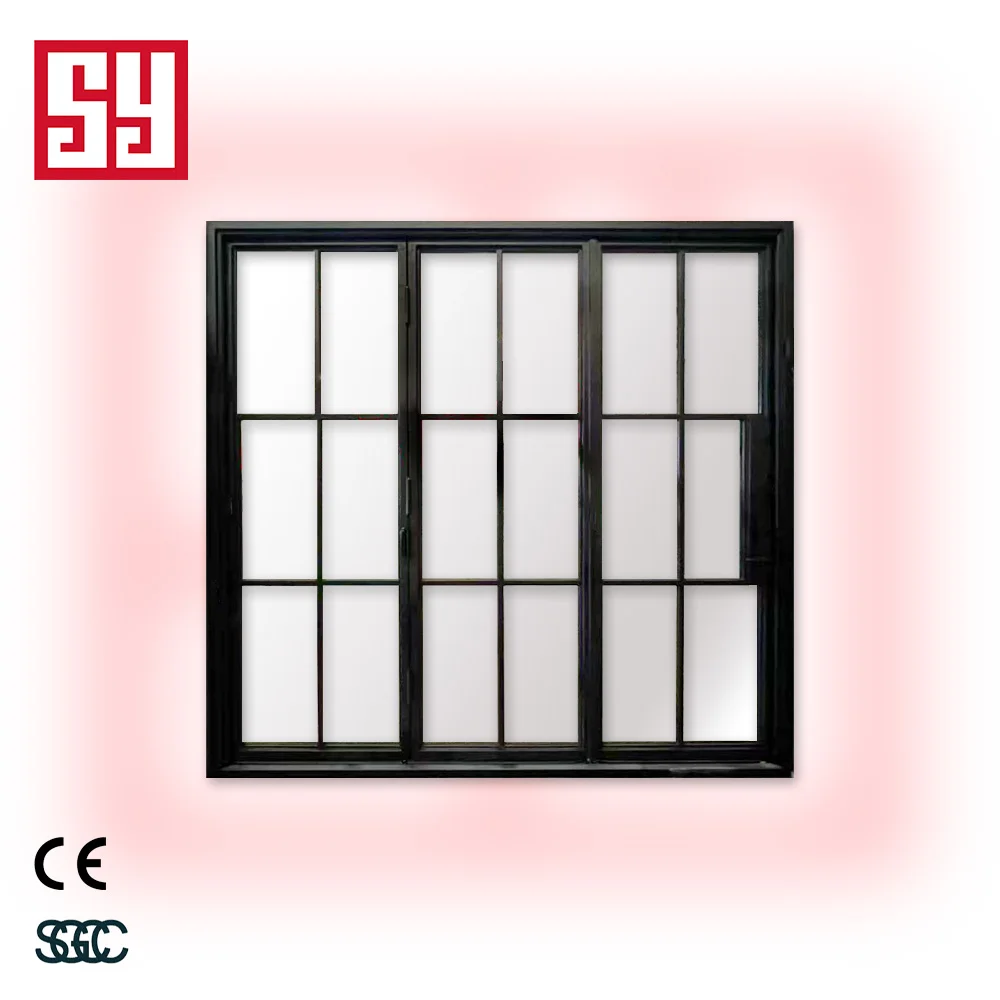
Over the past few years, commercial architects and facility managers have been specifying steel French doors at a noticeably higher rate. It is not just a stylistic choice — though the look certainly has its appeal. The real driver is performance under conditions that would send other door materials into early retirement. High-traffic retail environments, corporate lobbies, restaurant patios, and mixed-use developments all share a common set of demands: heavy use, exposure to the elements, security concerns, and aesthetic expectations that do not allow for worn-down appearances.
Market data backs up what many in the industry are seeing on the ground. The European iron and steel doors market alone was valued at USD 6.9 billion in 2024 and is projected to grow at a CAGR of 2.2% through 2034. The steel segment within that market held a 61.8% share in 2024. Globally, the steel door market is projected to reach USD 8.7 billion by 2033. Those numbers reflect a broader trend: commercial projects are moving away from materials that prioritize upfront cost savings and toward solutions that offer better long-term value. Steel French doors sit right at the center of that shift.
The most straightforward reason steel French doors keep showing up in commercial specifications is brute strength — but the advantage is more nuanced than just being "stronger than wood or aluminum." Steel is approximately three times stronger than aluminum, which allows for significantly slimmer frame profiles while maintaining structural integrity. That slimness matters in commercial settings because it means more glass area for natural light without sacrificing security or wind load resistance.
Consider what happens in a typical retail storefront. Shopping carts get bumped into doors. Merchandise displays get moved in and out. Delivery personnel push through with hand trucks. In climates with freeze-thaw cycles, wood French doors will warp and stick within a few seasons. Aluminum can dent and lose its true alignment. Steel handles the abuse differently — it flexes under impact and returns to shape rather than deforming permanently.
A project in the Pacific Northwest involved a high-end outdoor gear retailer that had replaced its storefront French doors three times in eight years — twice with wood, once with aluminum. The wood doors swelled in the wet winters and developed gaps in the dry summers. The aluminum set got dented within the first year from delivery carts. The steel French doors that went in during the most recent renovation have been in place for over four years with no structural issues, despite the same traffic patterns and weather exposure. The maintenance crew reports that the only attention the doors have needed is occasional hardware tightening and seasonal cleaning of the glass.
Noise control is becoming a non-negotiable requirement in commercial spaces, and this is where steel French doors offer a distinct advantage over alternatives. The hollow metal construction that gives steel doors their strength also provides a platform for serious acoustic engineering.
The Sound Transmission Class (STC) rating system offers a useful benchmark. Standard steel doors with commodity seals fall into the STC 25-29 range. But properly specified acoustic steel door assemblies can achieve STC ratings from 43 all the way up to 57. For context, an STC 40-44 rating is considered the minimum threshold when sound control is a priority — normal speech can be heard but some words or phrases may not be audible. At STC 45-49, normal speech and phrases are mostly blocked.
A restaurant group in Chicago learned this lesson the hard way. Their flagship location featured aluminum French doors separating the dining room from a private event space. During busy weekend services, noise from the event space bled into the main dining area to the point where guests were complaining. The aluminum doors had a stated STC rating of around 32, but site measurements showed effective performance closer to 28 due to installation variables. After switching to steel French doors with acoustic glazing and perimeter seals, the measured STC came in at 41. The difference was immediate — the event space could operate at full volume without disturbing the main dining room.
There is a persistent myth that steel doors cannot compete with wood or fiberglass on thermal performance. That assumption is outdated. Thermally broken steel French doors with dual or triple glazing can achieve U-factors as low as 0.21. To put that in perspective, many commercial building codes require U-factors of 0.30 or lower for glazed openings in climate zones with significant heating and cooling loads.
The thermal break is the critical detail here. Without it, steel conducts heat readily — the frame acts like a thermal bridge between interior and exterior. Modern thermally broken profiles separate the interior and exterior steel surfaces with a polyamide or polyurethane barrier, effectively stopping that heat transfer path. The result is a door that performs thermally on par with or better than wood or aluminum alternatives, while maintaining the slim sightlines that make French doors visually appealing.
One mixed-use development in Denver specified steel French doors for the ground-floor retail units and the residential lobby entrance. The development team had initially considered aluminum for cost reasons, but the energy modeling showed that thermally broken steel would reduce annual heating and cooling costs by an estimated 12-15% compared to the aluminum option with the same glazing specification. The steel doors also allowed for a narrower frame profile, which translated to roughly 15% more glass area per door — a detail that the leasing agent highlighted as a selling point for retail tenants.
Commercial spaces face security requirements that residential projects simply do not. Break-ins, forced entry, and even active threat scenarios are part of the risk assessment for many commercial buildings. Steel French doors address these concerns in a way that does not force a trade-off between safety and aesthetics.
The security advantage starts with the frame construction. Steel French doors are typically welded at the joints, whereas aluminum French doors are mechanically joined. Welded construction eliminates weak points that can be exploited during a forced entry attempt. The steel itself resists prying, kicking, and impact far better than wood or aluminum. With proper hardware — multi-point locking systems, heavy-duty hinges, and tamper-resistant screws — a steel French door assembly can meet or exceed the security requirements for most commercial applications.
There is also the question of fire resistance. Steel doors are inherently non-combustible and can be specified with fire ratings that simply are not available in wood or fiberglass. For commercial buildings, this can translate to lower insurance premiums and easier compliance with local fire codes.
A retail pharmacy chain in the southeastern United States had been using aluminum-framed glass doors at its storefronts for years. After a series of overnight break-ins at multiple locations, the corporate security team reviewed the door specifications and found that the aluminum frames were being pried open at the corners — exactly where the mechanical joints were located. The chain switched to welded steel French doors with multi-point locks for all new store constructions and retrofits. In the two years following the switch, not a single break-in was reported at a location with the steel doors.
The upfront cost of steel French doors is higher than aluminum and significantly higher than wood composite or fiberglass options. But looking only at the purchase price misses the full picture. Commercial doors are long-term investments, and the total cost of ownership tells a different story.
Steel doors require minimal maintenance compared to wood, which needs periodic refinishing and sealing. Aluminum doors, while low-maintenance, are prone to denting and can suffer from galvanic corrosion when in contact with certain other metals. Steel doors with proper coatings — galvanization, powder coating, or both — can last decades with nothing more than routine cleaning.
Replacement cycles are another factor. A wood French door in a commercial setting might need replacement every 8-12 years, depending on exposure and use. Aluminum might stretch to 15-20 years if well-maintained. Steel French doors, with proper specification and installation, often exceed 25 years of service life in commercial applications. When the cost is spread over that extended lifespan, the annualized expense of steel becomes competitive with or even lower than the alternatives.
A hotel chain operating in coastal Florida conducted a cost analysis across its properties. The hotels with wood French doors at poolside and beachfront entrances were averaging replacement every six years due to rot and corrosion from salt air. The properties with aluminum doors fared better at around 12 years, but the salt spray was causing pitting and aesthetic degradation within the first five years. The chain's newest property specified steel French doors with marine-grade powder coating. After three years of coastal exposure, the doors show no signs of corrosion or degradation — and the maintenance team reports that the annual cleaning and inspection routine takes about the same time as for aluminum.
French doors have always carried a certain visual sophistication, but steel takes that aesthetic and makes it work across a wider range of architectural styles. The slim profiles allow for clean, modern lines that suit contemporary commercial spaces. The material also accepts a broad range of finishes — from industrial matte black to custom color powder coats to faux wood grain — making it adaptable to traditional, transitional, and modern design languages.
For commercial projects, this versatility means one product line can serve multiple applications within the same building. A mixed-use development might use steel French doors with a black powder coat for the retail storefronts, a warm bronze finish for the residential lobby, and a custom color match for the office entrance — all from the same manufacturer, all with the same performance characteristics.
The growing popularity of steel French doors in commercial spaces is not a passing trend. It reflects a fundamental shift in how commercial projects evaluate building materials. The emphasis is moving away from first-cost optimization and toward life-cycle value, performance under real-world conditions, and the ability to meet multiple requirements — security, acoustics, thermal performance, aesthetics — in a single product. Steel French doors deliver on all those fronts.
For commercial architects, facility managers, and developers, the question is shifting from "Why steel?" to "Why not?" The material has proven itself across thousands of commercial installations, from retail storefronts to corporate campuses to hospitality venues. The performance data supports what the industry is increasingly recognizing: steel French doors offer a combination of strength, efficiency, and longevity that is difficult to match.
Manufacturers like Xiamen SenYi Ironware have been supplying steel French doors to commercial projects in North American and Australian markets for over a decade. Their experience with international specifications and custom fabrication has positioned them as a resource for commercial projects that require reliable performance across diverse climates and use cases. As the commercial sector continues to prioritize durability and long-term value, steel French doors are likely to become an even more common sight in the built environment.
 Hot News
2026-10-19
2026-10-12
2026-10-07
2026-09-25
2026-09-17
2026-09-11

Xiamen SenYi is a professional enterprise specializing in the research, design, production and sales of high-quality iron doors. It is dedicated to providing customized iron door that combine safety, practicality and aesthetic value for various customers.
No. 1043, Yincheng Mingzhu, Tong'an District, Xiamen City, Fujian Province, China
Copyright © 2025 by Xiamen SenYi Ironware Co., Ltd Privacy Policy
 EN
EN