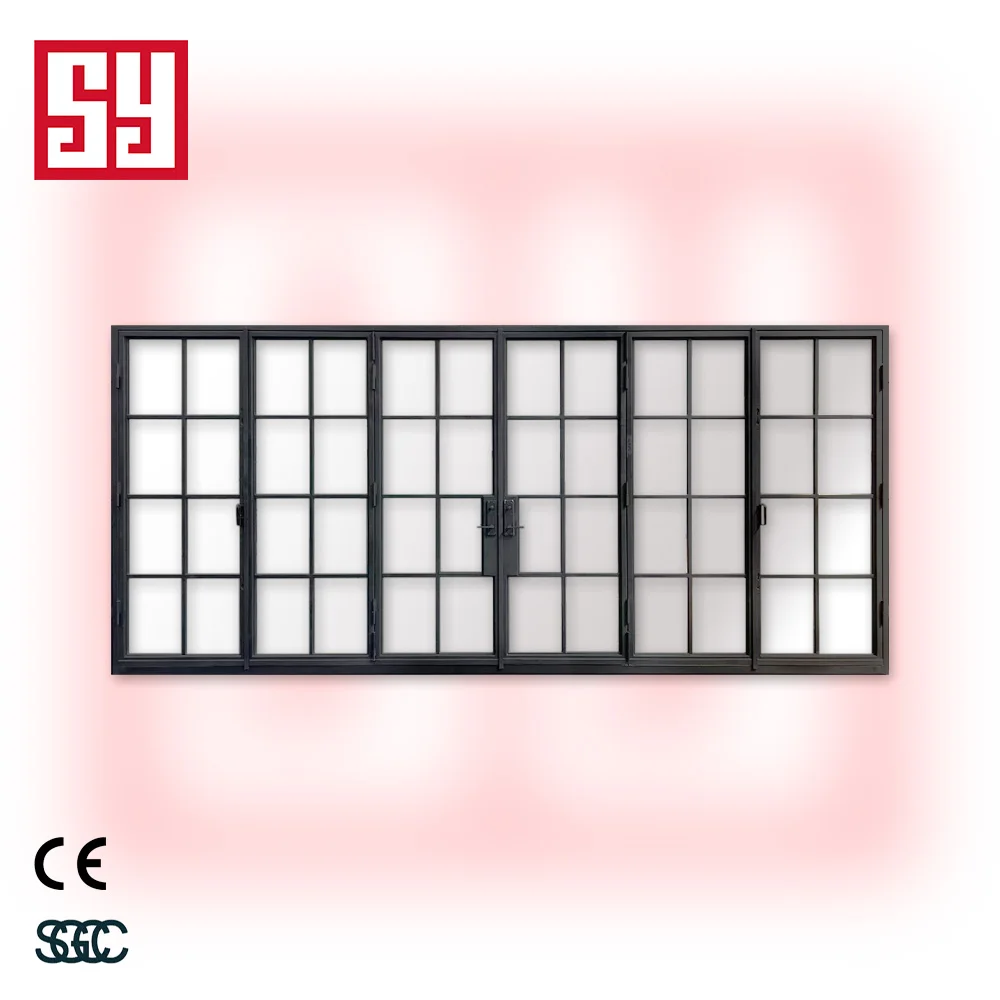
A commercial building is not a museum. Doors in retail stores, restaurants, showrooms, and office buildings open and close hundreds of times a day. They see traffic from customers, deliveries, and staff. They need to look presentable while taking a beating. Steel bifold doors have found a strong foothold in commercial applications because they deliver on aesthetics and durability in equal measure—a combination that many other door types struggle to achieve.
The visual impact that sells itself
First impressions matter in commercial real estate. The entryway sets the tone for the entire customer experience. Steel bifold doors offer a clean, contemporary look that works across a range of architectural styles. The narrow sightlines of steel framing maximize glass area, bringing natural light deep into the interior and creating a visual connection between indoor and outdoor spaces.
A restaurant chain in the Southwest replaced traditional storefront systems with steel bifold doors across its patio-facing walls. The result was a dramatic increase in natural light penetration and an open-air feel that became a signature element of the brand's identity. Customer dwell time increased measurably, and the restaurant reported a 15% uplift in patio seating utilization during moderate weather months.
Flexibility that adapts to changing needs
Commercial operations are rarely static. Seasonal changes, special events, and shifting traffic patterns all create different demands on building access. Steel bifold doors offer a level of flexibility that fixed or single-panel doors cannot match. The ability to open a full wall or just a portion of it gives commercial operators control over how much of the space is connected to the outside.
This flexibility translates directly to revenue opportunities. A retail store that can open its entire front facade during a sidewalk sale creates an inviting, accessible environment that draws foot traffic. A restaurant that can adjust its opening width based on weather and crowd size optimizes its use of outdoor seating. A showroom that can configure its entry based on the size of exhibits accommodates a wider range of events without permanent modifications.
Durability that keeps the doors operating
Commercial doors take abuse. Shopping carts, rolling racks, and hurried customers all pose risks. Steel bifold doors, with their welded steel frames and reinforced hinge systems, withstand this abuse better than most alternatives. The material does not warp, crack, or splinter. The folding mechanism, when built with quality bearings and track systems, maintains smooth operation through hundreds of thousands of cycles.
The European iron and steel doors market was valued at $6.9 billion in 2024, with growth driven in part by commercial sector demand for durable, low-maintenance entry systems. This market traction reflects a broader recognition that the upfront cost of steel is justified by the reduced frequency of repairs and replacements. A commercial property manager overseeing a portfolio of retail spaces noted that steel bifold doors required 60% fewer service calls over a five-year period compared to the aluminum storefront systems they replaced.
Thermal performance that manages energy costs
Commercial buildings are significant energy consumers, and doors are a primary source of thermal loss. Steel bifold doors with thermal break construction and insulated glazing achieve thermal performance that approaches that of fixed wall sections. The multi-panel design allows for continuous perimeter sealing, minimizing air infiltration at the joints.
Security that protects assets and people
Commercial properties contain valuable assets—inventory, equipment, and often cash. Steel bifold doors provide a level of security that glass-heavy aluminum systems cannot match. The steel frame resists forced entry, and the multi-point locking system distributes force across multiple points, eliminating the single point of failure that plagues standard commercial locks.
Consideration |
Steel Bifold |
Aluminum Storefront |
Glass Sliding |
Forced entry resistance |
High |
Moderate |
Low |
Impact resistance |
High |
Moderate |
Low |
Thermal performance |
Good (with insulation) |
Moderate |
Poor |
Natural light transmission |
High (with glass) |
High (with glass) |
High (with glass) |
Maintenance frequency |
Low |
Moderate |
Moderate |
Typical commercial applications |
Restaurants, showrooms, storefronts |
Storefronts, offices |
Storefronts, malls |
The security advantage is particularly relevant for ground-floor retail and for businesses that store high-value inventory. A jewelry retailer in a major metropolitan area specified steel bifold doors for its street-level showroom specifically because the combination of steel framing and laminated glass provided visible deterrence while maintaining the open, inviting appearance that the brand required.
The operational trade-offs
Steel bifold doors are not without operational considerations. The folding panels require side clearance for stacking, which may not be available in every floor plan. The hardware, while durable, needs periodic adjustment to maintain proper alignment. The doors are heavier than aluminum alternatives, which means the opening and closing effort—whether manual or motorized—must be accounted for in the design.
These trade-offs are manageable. Side clearance requirements are typically addressed during the design phase. Hardware adjustments are infrequent and straightforward. Motorized operators are available for larger or heavier configurations, eliminating manual effort entirely. The key is to specify the door system with a clear understanding of the actual operating conditions.
Commercial operators who have made the switch to steel bifold doors consistently cite the same factors: the doors look better, last longer, and offer more flexibility than the systems they replaced. The advantages are not theoretical—they show up in lower maintenance budgets, higher customer satisfaction, and greater operational agility.
Manufacturers like SenYi approach commercial steel bifold production with an emphasis on finish quality and hardware precision, understanding that in commercial applications, the door is both a functional component and a visual statement. The right steel bifold door does not just open a space—it defines it.
 Hot News
 EN
EN